

Someone once asked me, “Do you believe in Karma?”
I replied, “What do you mean by believing in Karma?”
They said, “If you do something wrong, you will pay for it in this life. That is Karma.”
This made me reflect on several questions: Why do we feel the need to “believe” or “not believe” in Karma? What is a wrongful or a good deed? Is there such a thing as a next life?
These questions sparked many others, but I want to focus on the core issue: Why do humans feel the need to believe in Karma? This question didn’t just appear in our minds randomly. There is likely an underlying reason that makes it important for us to believe that our actions will determine our fate. And not just for ourselves, but for everyone. We don’t only want to believe that we will face consequences for our actions—we also want to believe that others will face the same. This is why the question seems so relevant.
I want to explore the idea that the need to believe or not believe in Karma arises from our desire to justify our lives and actions.
Lack of Control Over Our Actions

If we had total control over all our actions—not just control, but the full awareness that each action was taken consciously—we wouldn’t worry so much about whether our actions were “good” or “bad.” For instance, a person who sleeps deeply after a tiring day automatically wakes up the next morning. They don’t question whether sleeping was good or bad Karma. The body needed rest, and they believe the body is themselves, so it feels like a fully conscious decision. However, once they are awake, the actions they take throughout the day may not feel entirely within their control, leading them to analyze their behavior later. To feel at peace, they might justify their actions as good, expecting good Karma in return.
The very need to justify an action suggests it wasn’t done with full consciousness. This lack of clarity in decision-making shows that we are often influenced by external factors.
A person who has true control over their actions would never need to look back and justify whether they were good or bad. They would simply act, without questioning the morality of their choices later.
Hurt by Others’ Actions
We often get hurt by the actions of others, whether emotionally or physically, but feel powerless to respond. In these moments, we may start to believe that their actions were bad Karma and that they will eventually face the consequences. This belief comforts us, allowing us to think that even if we didn’t hold them accountable, someone—or something—will. The issue here is not whether they committed good or bad Karma, but that we are affected by their actions.
When someone hurts us, it usually stems from an unmet expectation. We project this frustration onto the belief that Karma will catch up with them because we lack control over the situation.
I’m not justifying harmful actions. What defines “good” or “bad” actions is a separate debate. The key point here is that we perceive actions as good or bad, and we want to react accordingly. This leads us to choose to believe in Karma. Instead of reflecting on the internal void causing us to feel hurt, we seek to make sense of the situation by externalizing the belief in consequences.
No matter what we believe for ourselves or others, the internal void remains. We often choose not to be fully conscious of our own decisions, and instead, we allow ourselves to be impacted by others’ actions. This is why we turn to the concept of good and bad Karma, rather than fully examining our own behavior.
Belief as a Substitute for Self-Inquiry
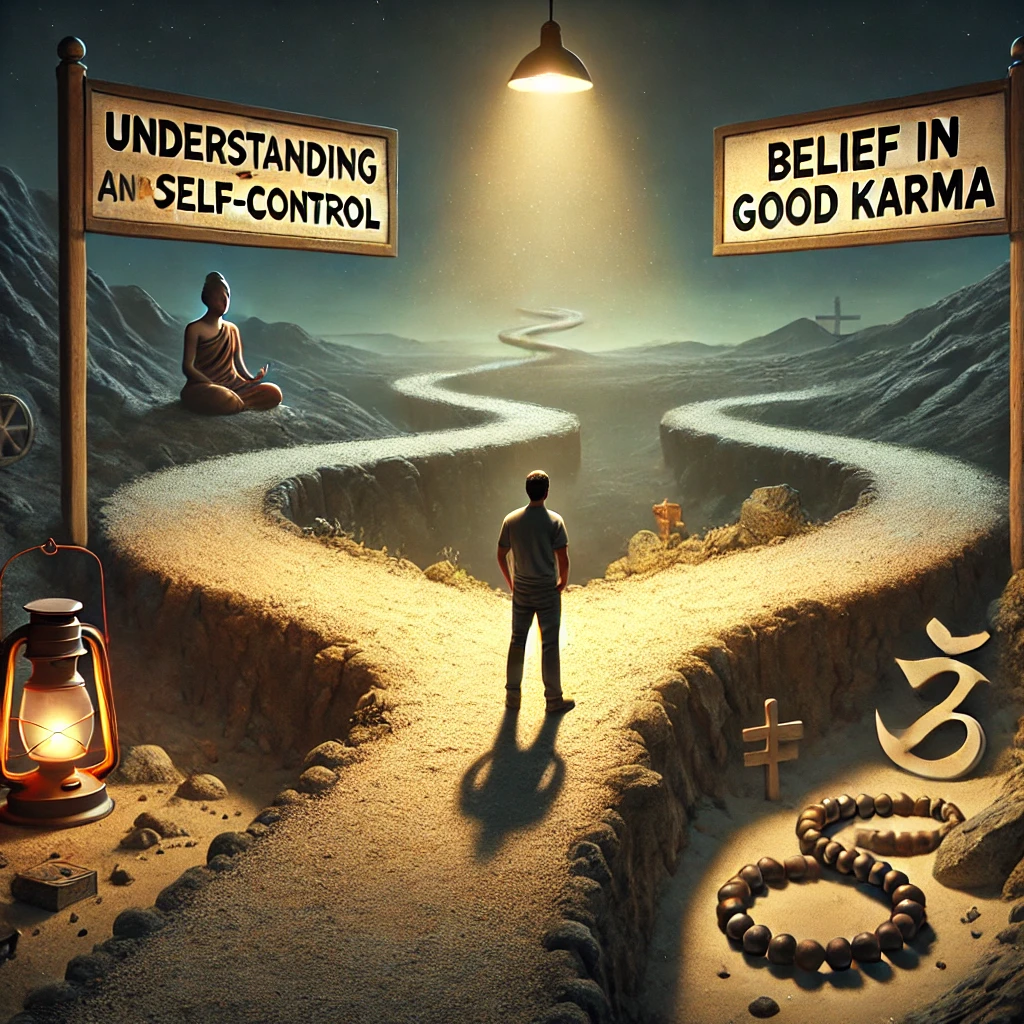
Instead of understanding ourselves better and gaining control over our actions, we often choose to believe that good Karma will lead to a good life. We have the option to explore the reasons behind our actions and learn from them, but we tend to ignore this. We find comfort in believing, rather than inquiring.
Karma is an example of a belief we use because we lack self-awareness and outsource our happiness. When we lack self-awareness, we perform actions that require retrospection. When we lack happiness, we avoid responsibility and accountability for our actions. Retrospection, responsibility, and accountability demand hard work and personal growth. Through this process, we can learn more about ourselves and come to understand the beliefs we hold. However, many people choose to believe rather than to self-reflect.
Action for the Day
Whenever you come across a belief like Karma or something similar, ask yourself, What is the underlying reason for this belief? Why are you seeking answers rather than exploring the belief itself? Could the belief be a way to avoid looking inward, avoiding the hard work of self-awareness and growth?

One response to “Do you believe in Karma?”
Great job 👏👍
LikeLike