
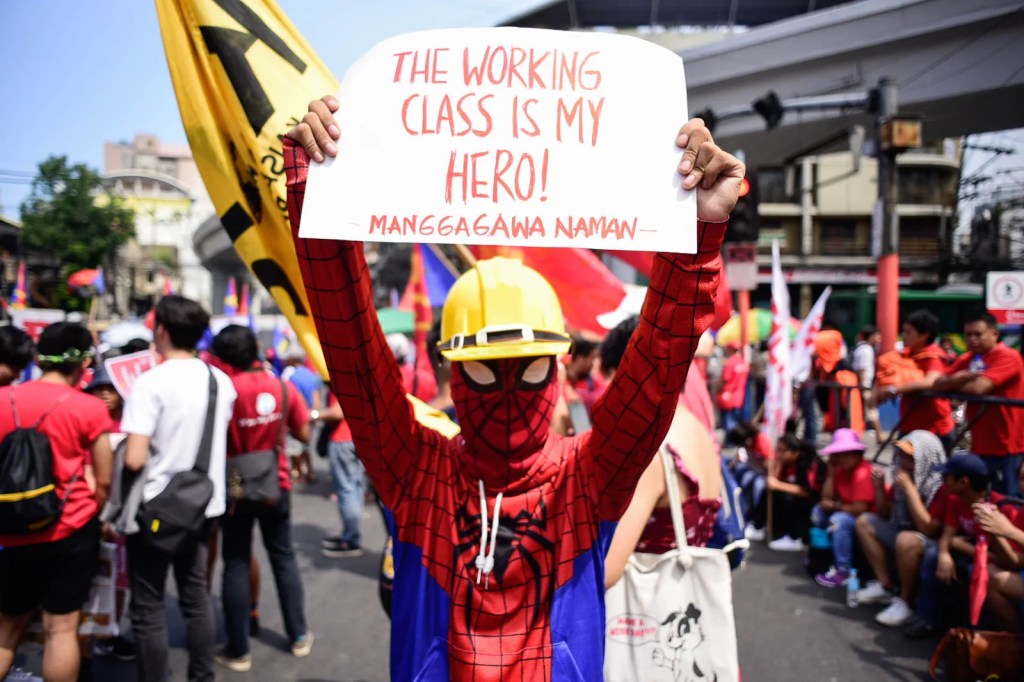
In 1886, workers protested for an 8-hour workday. In 2025, many are walking away from stable jobs in search of meaning. Work once meant survival — now it seeks to define our identity. But what happens when that identity feels hollow? The nature of protest has evolved — but has work?
What Is Labour Day?
Labour Day, celebrated on May 1st in many countries, honors the efforts and struggles of workers who fought for fair conditions. It originated from the 1886 Haymarket Affair in Chicago, where laborers demanded an eight-hour workday.
But who were these “labourers”? They were factory workers, construction workers, miners, and manual laborers — the backbone of the industrial revolution. These individuals worked under brutal conditions, often for 12–16 hours a day, six days a week. They had little to no safety standards or job security.
At that time, industrial laborers made up a large proportion of the urban workforce. Globally, about 70–80% of people were involved in manual or agricultural labor during the late 19th century, though accurate global data is limited. These were the voices that ignited the labor movement — not office-goers or professionals, but those whose bodies bore the weight of economic progress.
The Dissatisfaction Then:
- Grueling hours
- Child labor
- Unsafe conditions
- Exploitation
While early labor movements were rooted in survival and dignity, the modern era reveals similar challenges. During the Great Resignation in 2021, a large percentage of respondents cited low pay (63%), lack of advancement opportunities (63%), and feeling disrespected (57%) as reasons for quitting — showing that dignity-related struggles remain persistent even in today’s workplaces. These concerns echo the same dignity-related demands seen during early labor movements — safety, fair treatment, and respect.
Work was physical survival. The complaint was about oppression.
The Dissatisfaction Now:
- Burnout
- Lack of purpose
- Misaligned roles
- Emotional exhaustion
According to a 2022 Pew Research Center survey, many workers who quit during the Great Resignation cited deeper reasons beyond pay — such as misalignment with personal values, lack of meaning, or disillusionment with the ethical direction of their companies. These identity-related concerns, while less frequently mentioned than pay or respect, were strongly represented among white-collar and tech-sector resignations.
Work is psychological. The complaint is about identity and meaning.
The Evolution of Complaint
Each era brings a new complaint — not because we’re ungrateful, but because we’re evolving.
Solve burnout, and the mind asks for purpose.
Give purpose, and the mind questions why we work at all.
Dignity vs Identity — The New Misalignment
Earlier, workers wanted fair treatment. Today, we want our work to reflect who we are.
But when jobs don’t match our values or dreams, we feel stuck — even if the salary is good and the hours are reasonable. For instance, many AI engineers today earn high salaries building tools that they fear might replace jobs or compromise human agency. Creatives working for algorithm-driven platforms feel their expression is reduced to engagement metrics. During the Great Resignation — when over 47 million Americans voluntarily quit their jobs in 2021 — identity-related concerns gained noticeable traction, especially among white-collar workers. While not the majority, a significant number of professionals left roles because they found the work lacked alignment with their values or purpose. This underscored a growing awareness that even generous pay and flexibility could not replace the need for coherence and personal integrity in work.
This is the dignity vs identity paradox:
“When dignity is met, identity awakens. When identity is met, transcendence calls.”
The New Significance of Labour Day
Today, Labour Day is less about protest and more about reflection.
- What does fulfilling work mean in 2025?
- Are we building systems that nurture both livelihood and life?
- Can work become expression, not obligation?
This becomes especially relevant in the context of rapid AI evolution. As AI systems become capable of writing code, designing content, and making decisions once reserved for humans, entire professions — from software developers to designers to analysts — are experiencing an identity crisis. These tools aren’t just replacing repetitive tasks; they’re challenging the very uniqueness of our work. This evolution is poised to expand the number of people facing job transitions not due to poor treatment, but because the essence of their role is being automated.
The idea of tying our sense of self to growth — something external and often dependent on others — carries risk. For many, especially those without options, relying on external systems is a necessity, not a choice. But as we reflect, it becomes important to also cultivate self-reliance and sustainability where possible. Yes, systems should be held accountable for creating better conditions — but they are imperfect. The more power we give them over our lives, the more we risk being let down.
A meaningful way forward may lie in shared responsibility: expecting better, while preparing ourselves to build better too.
“As long as work defines us, complaints will follow it. But when work becomes an expression, even silence can feel fulfilling.”
Labour Day reminds us: the fight for fair work isn’t over — it’s just taken a quieter, more inward form.
