
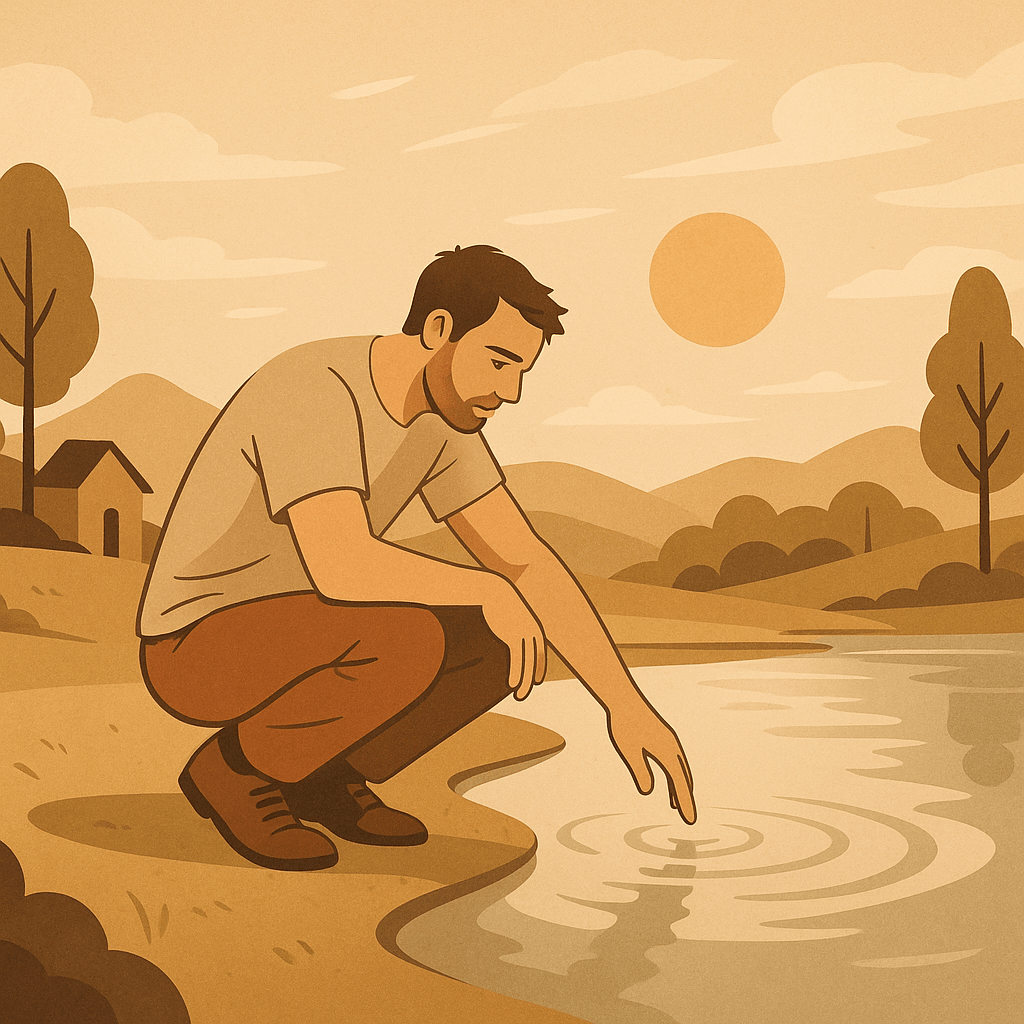
As human beings, we have only a handful of needs required to live a comfortable life — food, water, shelter, safety, companionship. Yet, we spend most of our lives striving beyond them. Why is that?
This blog is not a guide. It’s a pause. An invitation to question.
We are told — implicitly and explicitly — that more is always better. More money, more stuff, more experiences, more recognition. But what if this assumption is flawed? What if, by blindly accepting it, we’re building lives on shaky foundations?
The System Tells Us What We Need. But Do We Ever Ask?
From the moment we are born, we are nudged toward a common path — school, job, house, family, savings, retirement. Everyone’s needs are assumed to be the same. But are they?
Shouldn’t we all, at some point, ask:
What are my basic needs?
What kind of life feels enough for me?
Because if we don’t ask that early, we might wake up at 70 and realize we were just following a system designed for someone else — not for us.
We spend around 35% of our waking hours during our most active years working, often for things we never questioned wanting in the first place. Most of us are not working just to survive anymore. We’re working to upgrade. But to upgrade what? A life we didn’t even design?
Think about it:
- Apple told you that you need a phone that unlocks with your face or fingerprint.
- Ford and others sold you the idea that every individual should own a personal car.
- Real estate companies made you believe that living in a city apartment is a sign of success.
- Food companies convinced entire generations to stop growing food and start buying packaged meals.
- Fashion brands convinced you that last season’s clothes are outdated — even if they’re perfectly fine.
- Tech companies made you believe that your productivity depends on the latest gadget or software subscription.
- Wedding industries made it seem normal to spend tens of thousands of dollars on a one-day event.
- The fitness world shifted your focus from health to six-packs and perfection, making you buy supplements, gear, and memberships you may not need.
- Travel influencers made you feel that a fulfilling life must include far-flung destinations and curated photo moments.
These ideas didn’t arise from your personal needs. They were introduced, advertised, and normalized — until they became the default. And we rarely stopped to ask, do I really need this? Or did someone convince me I do?
What Is a Basic Need, Really?
Scientific research suggests that basic human needs go beyond just survival. According to models like Maslow’s Hierarchy of Needs and Self-Determination Theory, a person is likely to feel fulfilled and happy when core needs such as physical safety, emotional connection, autonomy, competence, and a sense of purpose are met. These needs are universal, but the way we fulfill them can vary greatly across cultures and individuals. True well-being comes not just from satisfying hunger or having shelter, but from feeling valued, capable, connected, and free to live with intention.
On paper, it’s simple: food, water, shelter, health, safety.
You die without these. So they’re called basic.
Luckily, in 2025, most societies have functioning systems to help fulfill these — access to food isn’t as hard as it once was, and law and order, though imperfect, broadly keeps us safe.
But here’s the catch: while scientific models give us a direction, they don’t offer a concrete checklist of “things” we must acquire. They speak in terms of feelings and conditions — not products. This ambiguity leaves room for the market to step in and define those needs for us. And it does so aggressively.
So once these needs are met — what’s next?
That’s where things get blurry.
We enter the space of “wants,” not needs.
And that space is where society thrives. It sells dreams, not necessities.
But here’s the problem: dreams without questioning become traps. want.
Who Profits from Your Wants?
Corporations thrive on your unexamined desires.
Education systems teach you to succeed, but not how to define success.
Governments measure GDP, not your happiness.
And somewhere in all this, you are handed a template for life — shiny, fast, full of options.
And yet, mental health is deteriorating.
- According to the World Health Organization, depression is the leading cause of disability worldwide, affecting over 280 million people as of 2023.
- Anxiety disorders are the most common mental health condition globally, impacting an estimated 301 million people, particularly rising among youth in both developed and developing countries.
- Suicide remains one of the leading causes of death among people aged 15–29, with higher incidence among urban populations, where stress and social comparison are more prevalent.
Despite global economic growth, psychological well-being is declining — pointing to a deeper crisis of meaning, identity, and unmet emotional needs.
More development. Less joy. Something doesn’t add up.
Are We Learning the Right Things? Fast, Educated, and Lost
If we aren’t getting happier, then is formal education — as we know it — solving anything?
It teaches us to be efficient, productive, employable. But it doesn’t teach us to define our own needs, to find purpose, or to live well. We become good at running — but not at deciding where to go.
This ties directly into society’s obsession with speed and growth — faster internet, quicker delivery, shorter attention spans. It’s not neutral. It’s a design flaw. A bug dressed up as a feature. In this pursuit of constant acceleration, we’ve disconnected from nature, from stillness, and from ourselves.
What if the real development is inward? What if awareness, simplicity, and clarity were better indicators of progress than speed or wealth?
And what about work — the thing we spend so much of our lives doing? Work, in itself, is beautiful. Essential. But what’s broken is the transactional nature of work — where we expect rewards, results, returns for every ounce of effort. It simply means we haven’t yet found a kind of work worth doing for its own sake. And that’s tragic.
Because when work becomes only a means to an end, and the end is unclear, we end up collecting “stuff” — hoping it will compensate for the joy we never found in the journey.
A Closing Thought: Your Life, By Your Design
This is not a call to renounce material life.
In fact, we are in a privileged position — perhaps the best point in human history — to make meaningful choices. Our societies have progressed in remarkable ways. In a previous blog, I reflected on how medical science has helped us overcome deadly diseases like smallpox, tuberculosis, and polio — achievements that would have sounded like miracles just a century ago.
As much as I admire and appreciate the progress we’ve made, new challenges have emerged — and this time, the responsibility lies with us. The market, media, and institutions are eager to define your needs for you. If you don’t take charge, someone else will.
That’s why it’s more important than ever to ask yourself: What do I truly need to live well? The more you understand yourself, the better choices you will make. It doesn’t mean rejecting the world — it means showing up with awareness. The moment you start believing it’s your life, and you are in charge, a quiet clarity begins to guide you.
So take ownership. Design consciously. Choose deliberately. And live intentionally.
This is a call to define your needs before society does it for you.
Start by asking:
- What is my basic need?
- How much is enough?
- What kind of work would I do even without applause?
Don’t live by default.
Live by design.
Even if that design looks simpler, slower, and smaller — it might be yours.
