
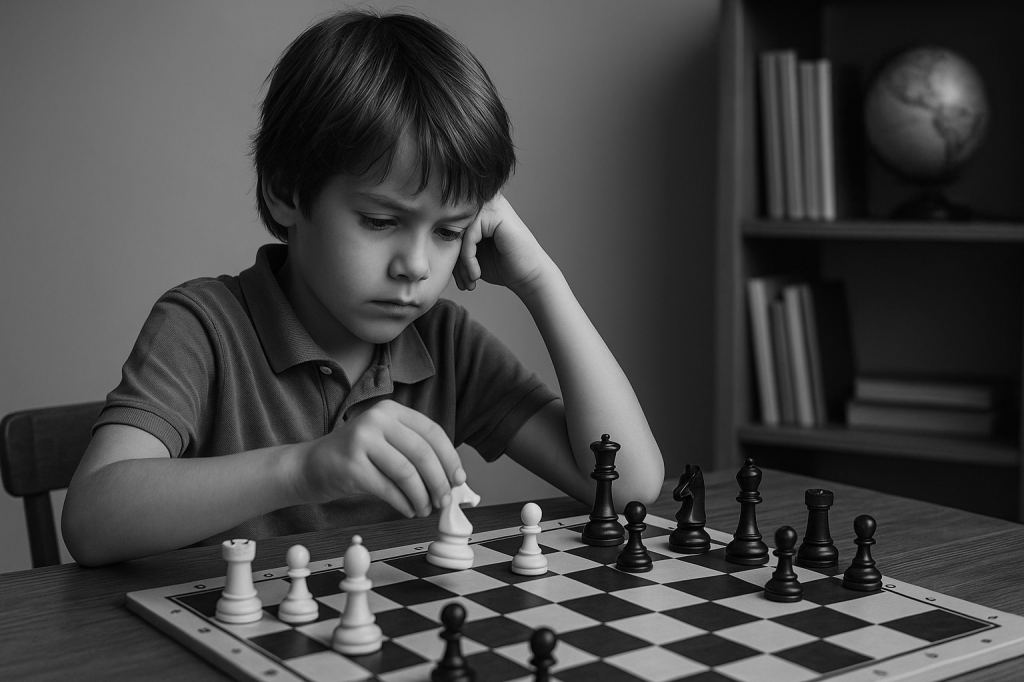
Chess is not just a sport — it is a way of life.
While outdoor sports teach teamwork, discipline, and the importance of physical health, chess teaches something rarer — the art of thinking for oneself.
A child who plays chess learns to analyze before acting, to plan before moving, and to take responsibility for every choice. Don’t be surprised if such a child grows into someone who can decide which school to join, what to study, or even what to pack for travel — all on their own.
Don’t be surprised when they:
- Begin to shine in other areas of life — learning guitar, physics, or outdoor sports — driven purely by curiosity.
- Don’t “believe” easily — they’ll ask for data before forming an opinion.
- Resist hero-worship and think independently.
- Value autonomy over approval, punctuality over excuses, and discipline over distraction.
Chess trains the mind not to follow, but to see — to see patterns, possibilities, and consequences. And that, more than any trophy, is the true reward of the game.
I once watched a 10-year-old calmly sacrifice a queen to win with a pawn. That moment stayed with me — not because of the move, but because of the mindset. He saw the bigger picture when everyone else saw loss.
Life is much like chess — both reward patience, foresight, and the courage to act when the time is right. Every move you make in life, like on the board, carries consequences that unfold several steps ahead. Some moments demand bold sacrifices; others require quiet waiting. You win not by reacting to what’s in front of you, but by seeing patterns others miss — understanding that even a setback can be part of a larger strategy. In both life and chess, mastery lies not in speed, but in clarity — the ability to think, pause, and move with purpose.
