
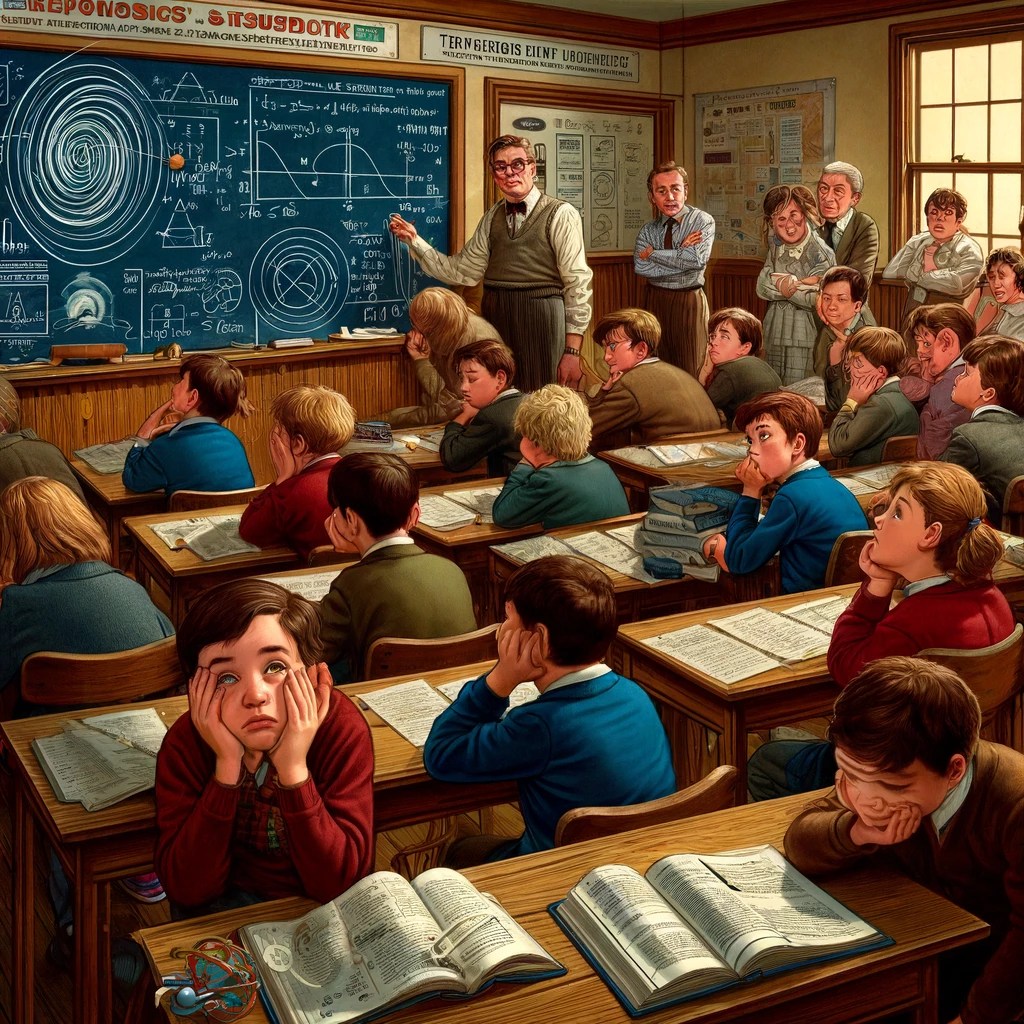
I used to hate physics, in fact, I still do. My recent topics of interest include “Where do we come from?” and “Is there a God?” and some more. Some consider these the big questions. While searching for answers, I suddenly came across a book titled “Brief Answers to the Big Questions,” and guess what—it was written by one of the most renowned scientists of the 20th century, Stephen Hawking. Why would a scientist talk about the “Is there a God?” question? Anyway, the point is—there seems to be a relationship between how philosophers and scientists think alike. In fact, both types of people are trying to find answers to similar questions, but in different ways. Scientists themselves know the very reason for their research, but by the time it comes into our school textbooks, the “Why” is removed, and the “How” is shown. In this blog, I talk about how philosophers and physics are co-related and how should we teach this subject to children.
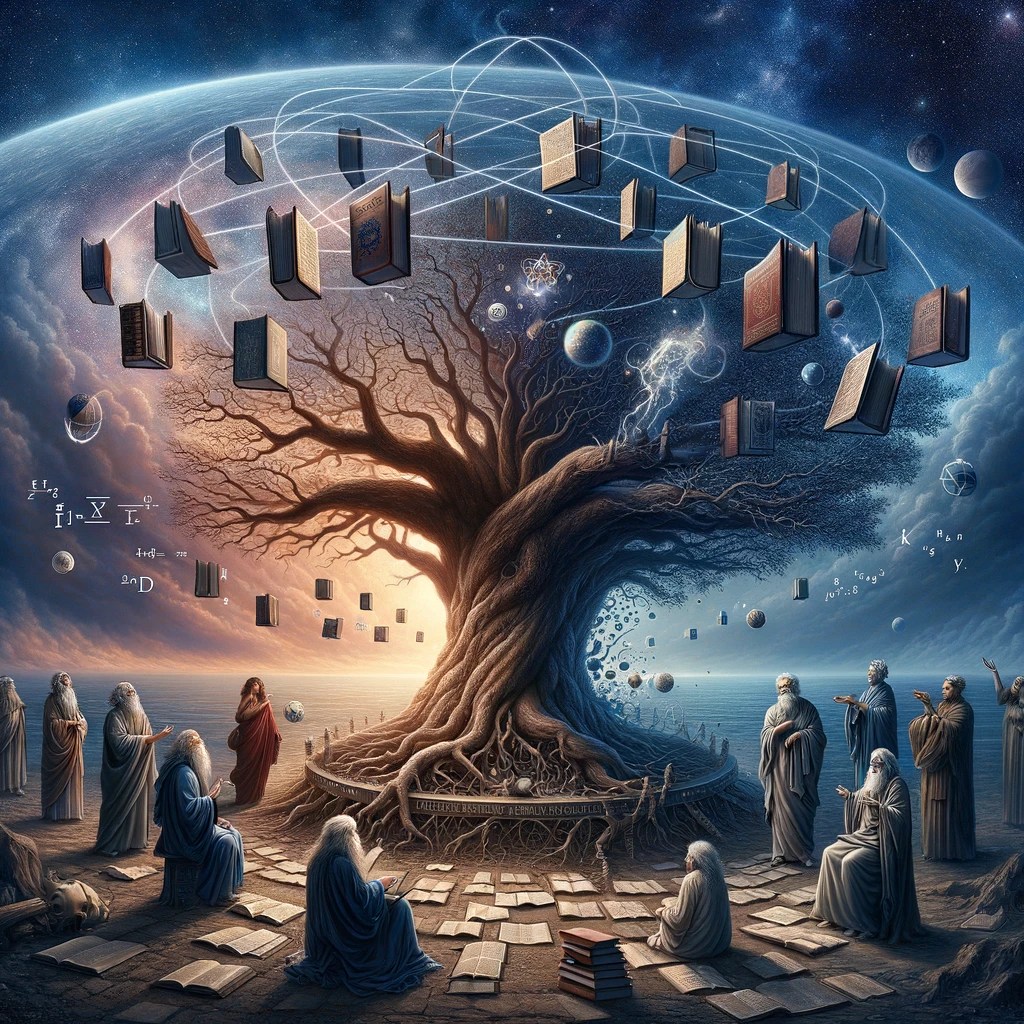
Let’s little bit understand what is Philosophy and how it intercept with Physics.
What is Philosophy?
Philosophy is like a big, fascinating puzzle about life and the universe. It’s about asking deep questions and trying to find answers to them, even if some questions are so big that finding complete answers might not be possible. Philosophers think about what’s right and wrong, why we exist, what the world is really like, and how we know what we know. They tackle the “big questions” like:
- What is the meaning of life? – Why are we here, and what is our purpose?
- Does God exist? – And if so, what is God like?
- What is reality? – What is the true nature of the world around us, and how is it different from how we perceive it?
- What is knowledge? – How do we know what we know, and what does it mean to truly “know” something?
- What is the right thing to do? – How should we act, and what makes actions right or wrong?
Some great philosophers who have explored these questions include:
- Socrates (469–399 BC): He’s one of the founders of Western philosophy. He’s famous for questioning everything and everyone, leading to the famous quote, “The only true wisdom is in knowing you know nothing.”
- Plato (428–348 BC): A student of Socrates, Plato wrote dialogues that explored justice, beauty, and equality. He also talked about the world of forms, an abstract realm that holds the perfect version of everything.
- Aristotle (384–322 BC): A student of Plato, he wrote on a wide range of topics, from metaphysics, ethics, and politics, to biology. He believed in using observation and reason to understand the natural world.
- Immanuel Kant (1724–1804): He explored how our minds contribute to our experiences of the world and argued that morality is based on duty, not consequences.
- Confucius (551–479 BC): A Chinese philosopher whose teachings focus on morality, family loyalty, and the importance of social harmony.
Intersection with Physics
The intersection of philosophy and science often involves deep exploration into the nature of reality, the basis of knowledge, and the structure of the universe. Here are a few questions that have intrigued both great scientists and philosophers, with examples of each:
- What is the nature of reality?
- Scientist: Albert Einstein – His work on the theory of relativity changed our understanding of space, time, and gravity.
- Philosopher: Plato – Introduced the theory of forms, which suggests that the physical world is not the true reality but a shadow of it.
- Does God exist?
- Scientist: Isaac Newton – Although much of his work was in physics and mathematics, he also wrote extensively on biblical prophecy and the existence of God.
- Philosopher: Thomas Aquinas – Developed the Five Ways, logical arguments to prove the existence of God.
- What is knowledge?
- Scientist: Richard Feynman – A physicist known for his work in quantum mechanics and for his unique perspective on what it means to understand something.
- Philosopher: René Descartes – Famous for his statement “I think, therefore I am,” he questioned the very foundation of what we can know for sure.
God does not play dice

Einstein believed that everything is pre-planned and measurable, suggesting that God designed the world as if humans have no free will. Heisenberg countered this claim with his uncertainty principle, stating that it is impossible to measure both the speed and position of any particle due to the inherent chaos in the world. Consequently, predicting human futures is also impossible; not even God can do it. This led to the assertion, “God really does play dice.” Without delving into their specific research, it becomes clear why they embarked on their scientific inquiries in the first place: both were on a philosophical quest. They reached different conclusions based on their research, echoing questions Plato asked 2,000 years ago. The method of reaching these opinions has evolved over time.
In essence, scientists begin their research with their own “why,” a question much simpler than what is often taught in schools.
What does it mean for educating children?
Schools teach the Theory of Relativity, the Uncertainty Principle, the Theory of Evolution, Gravitation, and other important concepts of physics. However, they often fail to explain why these concepts are significant and why scientists dedicated their lifetimes to pursuing answers. The Theory of Relativity challenges our understanding of reality itself; the Uncertainty Principle raises questions about free will; the Theory of Evolution explores the interconnectedness of all living beings; and Gravitation probes the fundamental forces shaping the universe. Nearly all scientific experiments are efforts to grasp the meaning of our existence. Those scientists neither knew nor cared about the potential applications their experiments might yield; such developments are often the pursuits of capitalists.
We should teach children about the important questions and why brilliant minds sought answers. We need to convey that there are multiple approaches to finding answers. It’s crucial not to depict science and philosophy as opposites but to encourage an understanding that knowledge and resourcefulness go hand in hand. Instead of fostering merely knowledgeable individuals, we should aim to cultivate resourcefulness.
In today’s world, knowledge is abundant. Have you figured out what to ask?
Gagan Mani

One response to “Wrong way of teaching physics to children”
[…] in an evidence-backed manner. Its thought-provoking content inspired me to write my own blog, Wrong Way to Teach Physics, reflecting on how science can transform our understanding of the […]
LikeLike