

I don’t usually write about technology, but I can’t help myself this time. The long-term impact of Artificial Intelligence is too profound to ignore. We cannot truly understand the future if we don’t understand the role AI is going to play in it. This isn’t just another industrial or digital revolution—it is the biggest transformation of human civilization.
In 2025, AI has already begun automating repetitive jobs, and its impact is only growing. But this isn’t just about automation; it’s about reshaping the very concept of work. Over time, AI will eliminate human producers from the equation.
The End of Producers
A producer is someone who creates something of value for consumers. A teacher produces education. A software engineer produces software. A plumber fixes leaks. A cab driver provides transport. A construction worker builds. A scientist predicts climate trends. The list goes on.
At first, AI will simply assist in these roles, making production more efficient. But eventually, AI will take over completely. The transition will not be in the hands of human producers but in the hands of capitalists—the ones who fund and drive AI development. And this transition won’t be about whether humans want to keep their jobs; it will be about the quality and efficiency of AI-produced work. When AI does something faster, cheaper, and better than humans, businesses will make the switch—because that’s how capitalism works.
What Happens When Producers Disappear?
Producers don’t just create—they also consume. A software engineer earns money and spends it on food, entertainment, housing, and luxury. But when AI replaces human producers, those people will lose their income, and their ability to consume will drop drastically.
Not everyone, though. The ones developing and controlling AI will remain in power. This will lead to a massive divide in society—something we’ll explore in another discussion. But for now, let’s focus on the bigger picture: how will human life change when people no longer have work?
The Void of Time
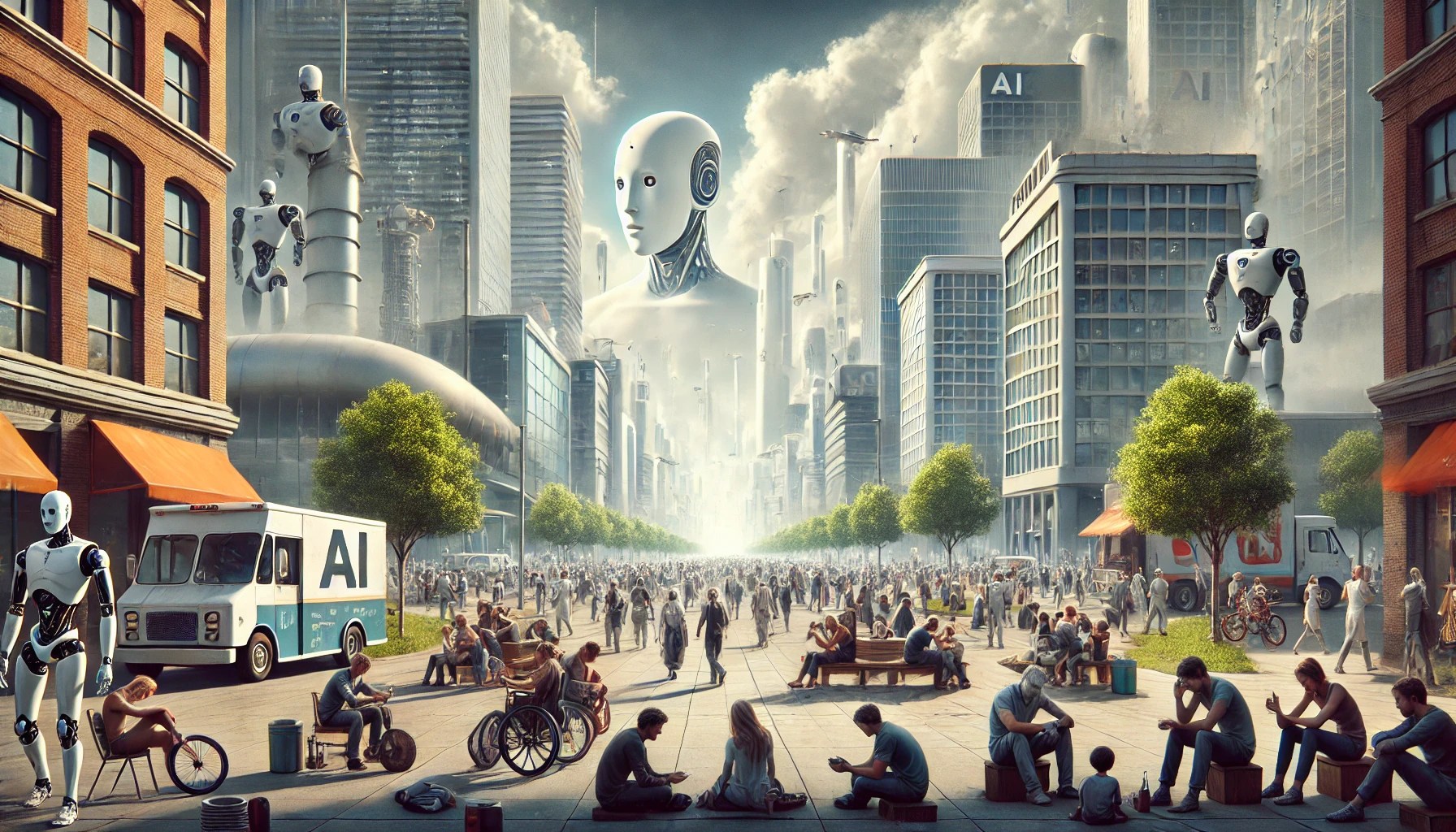
Today, most of us spend 70% of our waking hours working. The rest of the time, we consume—watching movies, buying cars, upgrading houses, and hiring help to maintain those houses. Our lives revolve around production and consumption.
But when AI takes over production, humans will be left with time—more time than ever before. And most won’t know what to do with it.
The transition to this reality will not be smooth. There will be protests, blaming AI policies. The media will criticize capitalists for letting AI “go too far.” Politicians will make false promises to stop this evolution. People will shift toward minimalist lifestyles in reaction to the loss of work. But eventually, beyond all these cultural and political struggles, the inevitable will happen: the majority of humans will have no work, and without work, nothing to consume.
How Do We Prepare for This Future?
The future does not require resistance; it requires clarity. Instead of fearing AI, we need to deeply understand our relationship with work and consumption.
- Find purpose beyond outcome – The purpose of your work should be clear to you, and it should not be dependent on external rewards.
- Stop mindless consumption – Pay attention to how and why you consume external products, entertainment, and material things.
- Be mindful of time – When you are left with an abundance of time, how will you use it?
- Analyze the “why” behind your work – Even if your role is replaced by AI, what else can you produce that aligns with your personal philosophy?
The future is not about fighting AI; it is about redefining human existence. We must seek clarity—clarity on what gives us fulfillment, clarity on why it is important to do good selflessly, and clarity on how to create meaning in a world where traditional work is no longer necessary.
The age of AI is not the end of human potential. It is an opportunity to rethink what it truly means to be human.

One response to “The AI Revolution: Human Producers Are Being Replaced”
[…] — people who use their skills to create products or services. I have written in detail about how AI is replacing producers. We can only hope we are alert enough to see the signs and prepare in […]
LikeLike