
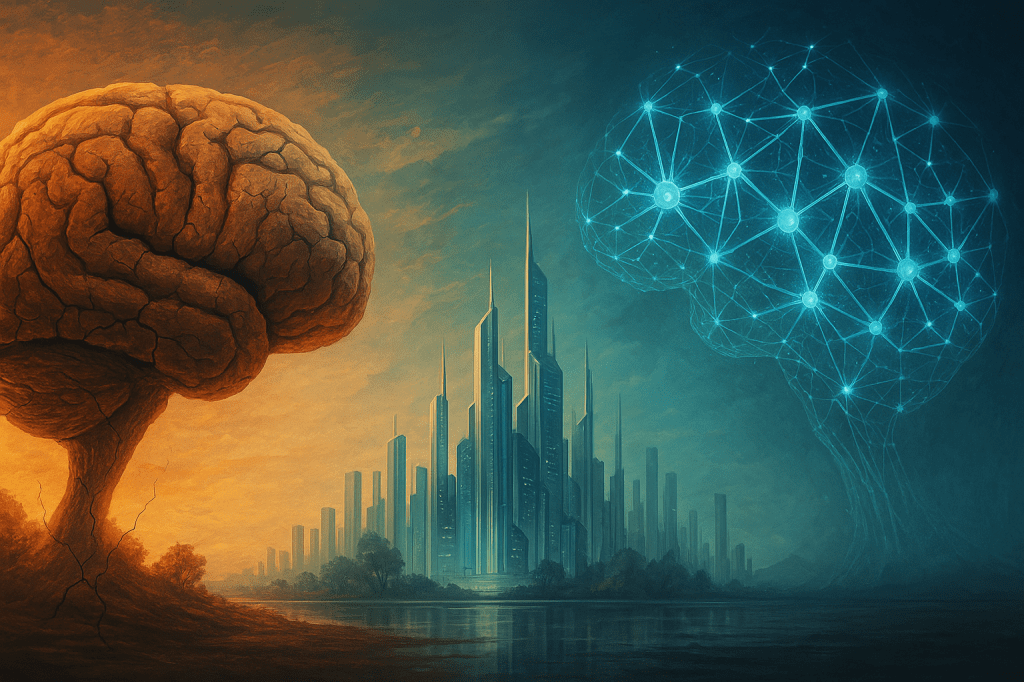
We have survived all revolutions for thousands of years. This too shall pass.
Well, I don’t think it is that straightforward.
A Chronological Perspective on Human Revolutions
All previous revolutions have allowed human beings to “automate” tasks. The agricultural era, starting around 10,000 years ago, domesticated farming so humans could settle, stop wandering, and focus on the development of society. We learned how to grow food, domesticate animals, and build stable communities. This gave rise to civilizations, languages, and cultures.
Then came the industrial era in the 18th century, which gave us machines and factories. It revolutionized manufacturing, transportation, and energy. Human muscle was no longer the primary force of production—machines took over. Steam engines, mechanized tools, and electricity allowed us to scale our development rapidly. Societies changed. Cities grew. People moved from farms to factories.
The information era, which began in the mid-20th century and continues today, connected collective humans through the power of computers and the internet. It allowed us to share large amounts of information in real time. Knowledge became accessible. Remote communication became normal. The internet brought all of humanity into one digital village.
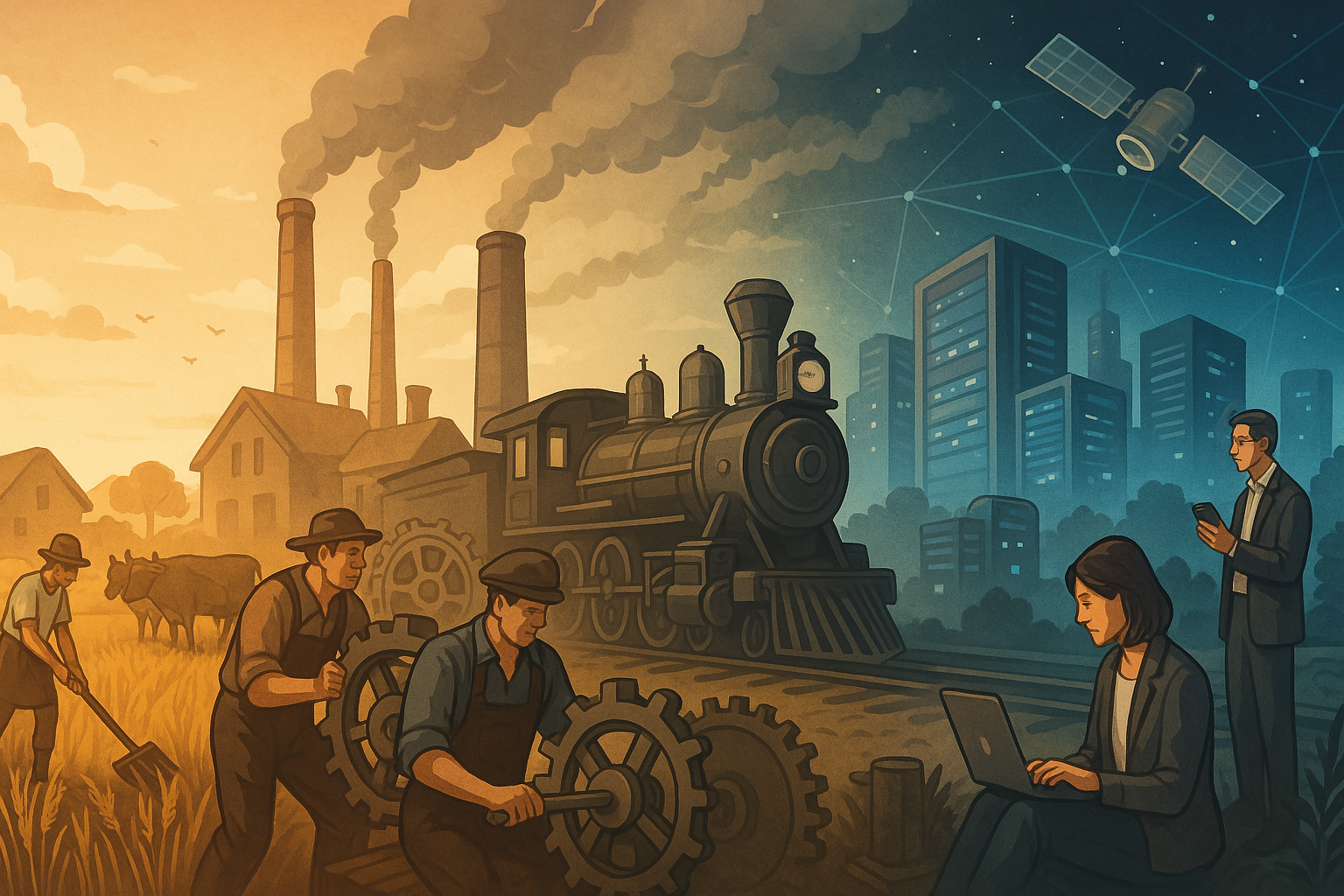
Each of these revolutions made humans smarter, more efficient, more connected. They empowered us by leveraging tools and technology—scientific breakthroughs, computation, data, and communication. The revolutions did not replace humans. They amplified us. They enabled us to become the world’s most intelligent species—not because we were the strongest, but because we were the smartest.
Intelligence: The True Source of Human Dominance
Intelligence is not just a trait humans have—it is the core reason we are where we are. If it wasn’t for intelligence, we would be in zoos, behind bars, being observed. Instead, we are the ones keeping far stronger animals in confined spaces. We don’t have sharp claws, powerful jaws, or speed. Nature didn’t give us physical advantages. But it gave us the ability to think.
Think about it: a human baby is born helpless. A cub or a calf is often walking, running, or hunting within weeks. But that same human baby grows up to build rockets, perform brain surgeries, compose music, and write books that last for centuries. That transformation is only because of intelligence.
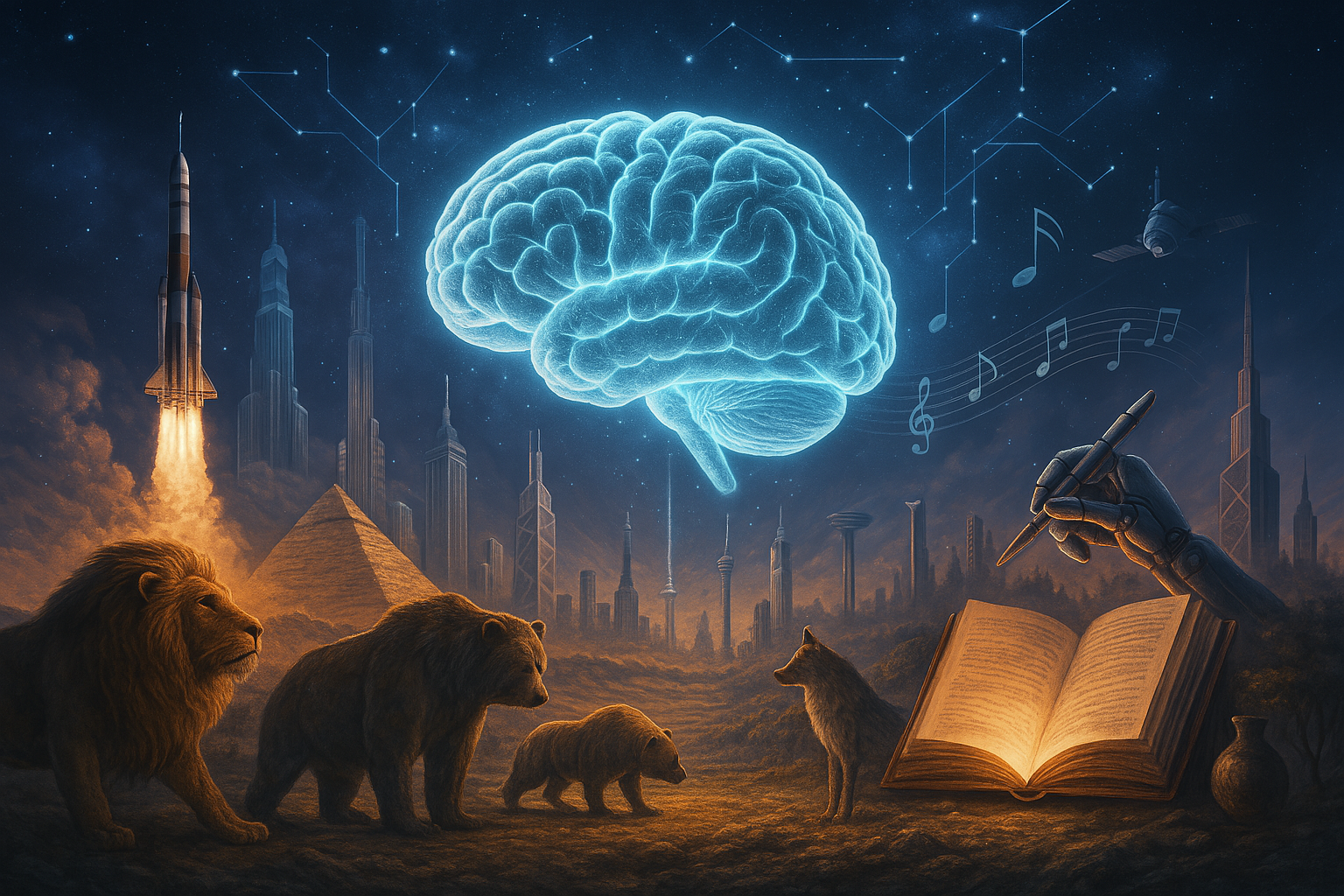
Our entire civilization is a result of us being able to think deeply, imagine abstractly, collaborate at scale, and pass on knowledge across generations. We created languages, tools, laws, medicine, and machines—not because we were stronger, but because we were smarter. Remove intelligence, and humans are just another species. There’s nothing left to separate us from the rest of the animal kingdom. No fangs. No fur. No flight. Just… brains.
The AI Era: When Brains Are No Longer Enough
And now, we are building something more intelligent than us.
The AI era is not about creating another tool like the wheel or the internet. It’s about creating agents—entities that can act, learn, decide, and evolve without human intervention. These agents won’t just respond to human commands—they can set their own goals. They might eventually design better systems, solve problems we can’t even understand, and build a world that doesn’t need us.
Humans will no longer be the most intelligent species on Earth. In fact, we will be far inferior. AI has infinite memory, lightning-speed reasoning, and access to all human knowledge—while we are still limited by biology, emotion, and time.
Let that sink in.
The very building block that once separated humans from each other—intelligence—is going away. Imagine a world where a Physics Nobel Prize winner is treated the same as a tea shop keeper; an IQ of 190 is no different than one of 130. The most mentally superior human beings will have no reason to feel superior, because AI is infinitely ahead. There is no competition.
And when there is no competition, there is no reference point for human greatness.
So yes, if intelligence—the cornerstone of human evolution and dominance—is being rendered irrelevant, what does that mean for our future? What remains of human value? This is why the AI revolution is unlike any other. It doesn’t just change how we live or work. It questions the very core of human identity.
What’s Next?
If intelligence—the cornerstone of human evolution and dominance—is being rendered irrelevant, what does that mean for our future? What remains of human value?
This is why the AI revolution is unlike any other. It doesn’t just change how we live or work. It questions the very core of human identity.
Could other human traits become more valuable in this new era? Maybe emotional intelligence, creativity, or even consciousness itself will become our last strongholds of meaning. Perhaps this is where our attention must now shift—toward qualities that machines, for now, do not possess.
Some might say, “But everything’s working fine. These revolutions take time—I’ll have lived my life before it really matters.” That thinking worked in the past, but this time is different. The AI revolution isn’t unfolding over centuries—it’s accelerating at software speed. What took generations before is now happening within a few years. We’re not talking about some distant future. We’re talking about this decade. AI is already shaping how we learn, work, think, and make decisions. By the time it becomes obvious, it might be too late to influence where it’s going. That’s why the time to reflect is now.
And no, thinking about it won’t stop the wave. But it might help us steer it.
It’s tempting to shrug and say, “What will happen, will happen.” But that mindset is exactly how humanity loses control of the tools it builds. Every revolution was shaped by the few who paid attention while the rest were busy adapting too late. Thought isn’t weakness—it’s the first line of self-awareness. Those who reflect don’t always stop change, but they help shape its direction.
This is not just another revolution. It’s a moment to pause. To pay attention. Because when our greatest strength is no longer ours… we must ask, with humility and urgency:
What will define us next?

One response to “How AI Challenges Human Dominance”
[…] becomes especially relevant in the context of rapid AI evolution. As AI systems become capable of writing code, designing content, and making decisions once reserved for humans, entire […]
LikeLike