
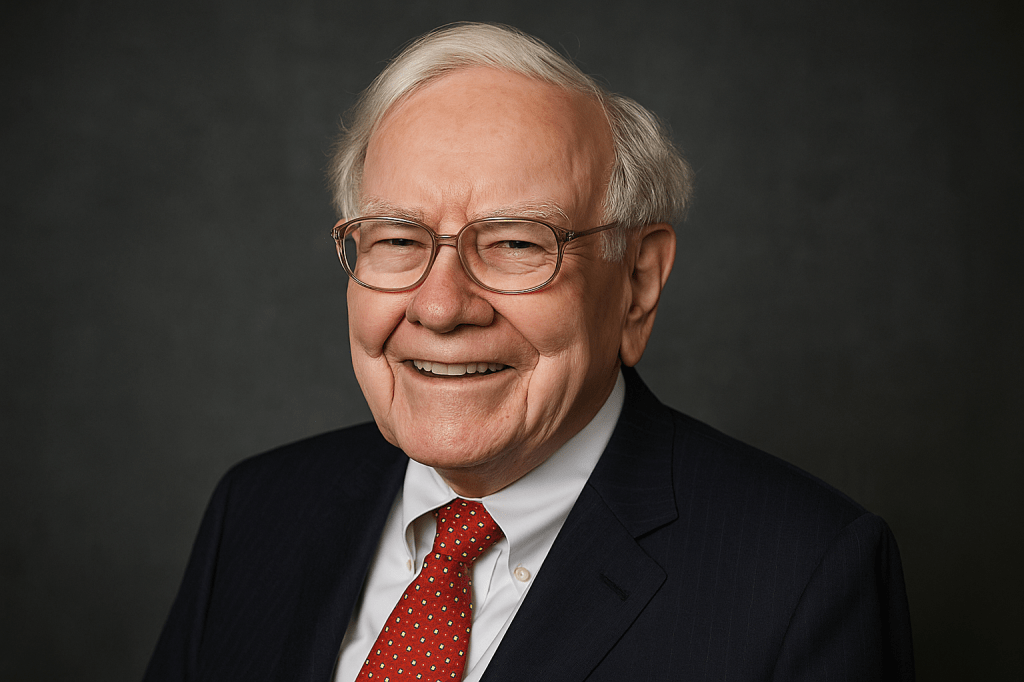
“You can’t buy time. You can’t buy love. But you can live wisely enough to earn both.” – Warren Buffett
A Different Kind of Billionaire
On May 4, 2025, Warren Buffett delivered his final speech as chairman of Berkshire Hathaway at the annual shareholders meeting in Omaha. The crowd erupted in a standing ovation that lasted over five minutes — not for his wealth, but for a life lived with clarity, humility, and consistency. That day, he left the audience with a powerful parting message:
“Ultimately, the measure of your life isn’t how much you accumulate, but how many lives you’ve touched.”
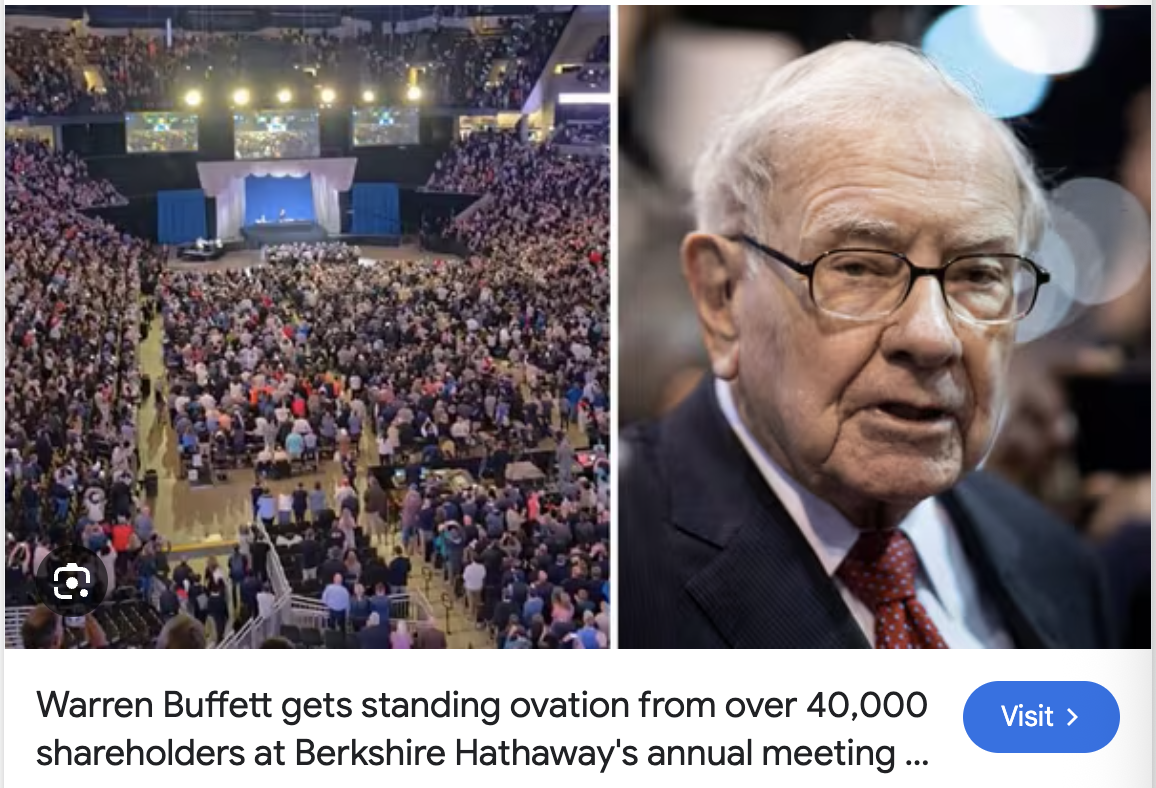
In a world where capitalism is often equated with greed, Warren Buffett stands as a paradox — a billionaire who lives simply, gives generously, and speaks with the clarity of a monk. He doesn’t meditate on a mountain or preach from a pulpit, yet his life offers something profoundly spiritual: a quiet mastery of desire, ego, and time.
What makes Buffett exceptional isn’t just his ability to build wealth — it’s how little of it he needs to feel fulfilled. His journey isn’t just a financial success story; it’s a lesson in detachment, discipline, and purpose.
Detachment in Simple Living
Spirituality is often mistaken as a rejection of the material world. But at its heart, true spirituality is clarity — the ability to see yourself, your desires, and your choices without distortion. Warren Buffett embodies this clarity not through words, but through the quiet conviction of his life.
“I really like my life. I’ve arranged my life so I can do what I want.”
Despite a net worth exceeding $100 billion, Buffett’s identity isn’t built on wealth. He never chased money for its own sake. What he values is freedom over luxury, process over outcomes, and thinking over reacting. His actions reflect this rare detachment:
- Lives in the same modest Omaha house he bought in 1958 for $31,500
- Eats burgers, drinks five cans of Coke a day, and plays bridge for fun
- Avoids status symbols, luxury brands, and media spotlight
- Doesn’t collect art, cars, or exotic estates — his habits remain simple and consistent
- Has donated over $50 billion and pledged 99% of his wealth to charity
- Though Berkshire Hathaway owns a private jet (the “Indispensable”), Buffett mocks the indulgence and avoids using it for personal luxury
This is not just frugality — it’s a deep form of detachment from time. A spiritual discipline, hidden in plain sight.
Buffett treats time as sacred. He spends hours reading (up to 500 pages a day), avoids distractions like meetings and emails, and protects his calendar like a monk guards his solitude.
“The rich invest in time, the poor invest in money.”
He doesn’t hustle. He doesn’t rush. He waits — sometimes for years — and acts only when his thoughts are fully formed. That kind of restraint is not merely strategic; it’s spiritual.
“If you’re not interested in owning a company for 10 years, don’t even think about owning it for 10 minutes.”
“Nature does not hurry, yet everything is accomplished.” – Lao Tzu
“Detachment is not that you should own nothing, but that nothing should own you.” – Ali Ibn Abi Talib
Buffett doesn’t quote saints. But he lives their wisdom. Quietly. Persistently. In full control — not of the world, but of himself.
How Buffett Compares to Other Billionaires
Compared to other top billionaires, Buffett’s simplicity stands out:
- Elon Musk (Net worth: ~$383.2B as of May 2025) lives in a tiny prefab house now, but owns multiple luxury properties and runs companies pushing the edge of tech and fame.
- Jeff Bezos (Net worth: ~$216B as of May 2025) has invested in superyachts, luxury real estate, and space travel through Blue Origin.
- Mark Zuckerberg (Net worth: ~$215B as of May 2025) is known for daily routines and plain clothes but also owns properties across Hawaii and California.
- Larry Ellison (Net worth: ~$192B as of May 2025) owns an entire Hawaiian island and has a history of lavish spending.
- Warren Buffett (Net worth: ~$154B as of May 2025) uniquely lives in the same modest home since 1958, avoids luxury spending, and continues to donate the majority of his wealth.
None of these lifestyles are inherently wrong — but they represent a different relationship with money. Buffett, uniquely, has lived almost identically since the 1960s, showing a remarkable level of inner stability. In a world where net worth often shapes identity, he chose contentment over consumption. Unlike many of his peers, he owns just one modest home and avoids luxury goods entirely.
“Do not let making a living prevent you from making a life.” – John Wooden
Mind Over Market
Buffett never aimed to run companies. He just loved the idea of owning good businesses. He found his joy in the process — not in applause, not in exits, and certainly not in shopping.
“The difference between successful people and really successful people is that really successful people say no to almost everything.”
In that, too, there is something deeply yogic. True yogis don’t run away from life — they move through it with intention.
Closing Thought: The Shade You Plant
“Someone’s sitting in the shade today because someone planted a tree a long time ago.”
Buffett didn’t just plant financial trees. He planted philosophical ones — whether he meant to or not.
So if you must learn from Warren’s life, don’t just study the numbers. Study the mindset. Study the rhythm. Study the stillness.
Because in a noisy world, he’s proof that you can stay calm, stay kind, and still win — without ever chasing.
In general, try to understand the mindset of people you truly appreciate. What they accumulate is not important — how they make decisions is what you can learn from. Eventually, it is you who have control over your life and will have to take action. To live a fulfilled life, you do not need to study spirituality, read a hundred books, or chase external knowledge. Find the right purpose, stick with it for the right reasons. Everything else is a byproduct. Buffett’s life is a living example of longevity, contentment, and success.
Now the question is: What are you planting today — and are you planting it for the right reasons?

2 responses to “Warren Buffett: The Most Spiritual Capitalist”
his life is a perfect example of disciplined philosophy and philanthropy.
LikeLiked by 1 person
Very true. A rare gift.
LikeLike